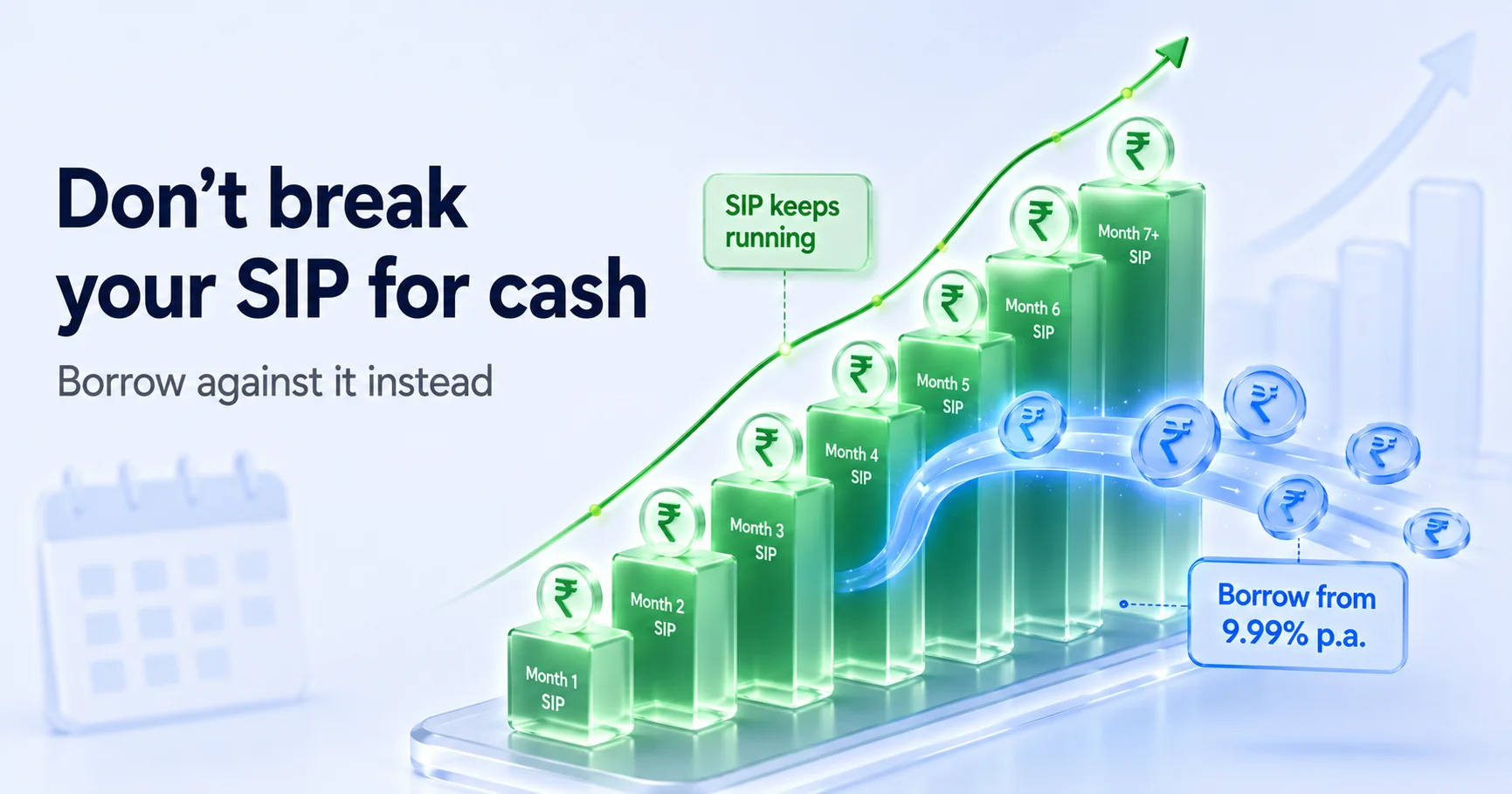
A cash need shows up, and the easiest lever to pull feels like the SIP. Pause it, or redeem what has built up, and the pressure eases. It is the most common money mistake disciplined investors make, because the cost is invisible at the moment you make it and painful years later.
The good news is that you rarely have to choose between your SIP and your short-term need. You can borrow against the very units your SIP has built, keep the SIP running, and leave your compounding untouched. Here is why that matters and how it works.
What breaking a SIP actually costs
A SIP works because of compounding and consistency. Every instalment buys units, those units earn returns, and those returns earn returns. Two things break that engine:
- Lost compounding. Money you redeem stops growing. The longer it would have stayed invested, the larger the gap, because compounding does its heaviest lifting in the later years.
- Lost rupee-cost averaging. Pausing a SIP means you stop buying during dips, which is exactly when your instalments buy the most units. You cannot get those cheap units back later.
There is also a quieter cost: restarting is hard. A paused SIP often stays paused, and a redeemed goal rarely gets rebuilt to where it was. Breaking the habit is what really sets people back.
A worked example: the price of pausing
Check your credit limit on Volt Money. Free, takes 15 seconds.
Check your limit →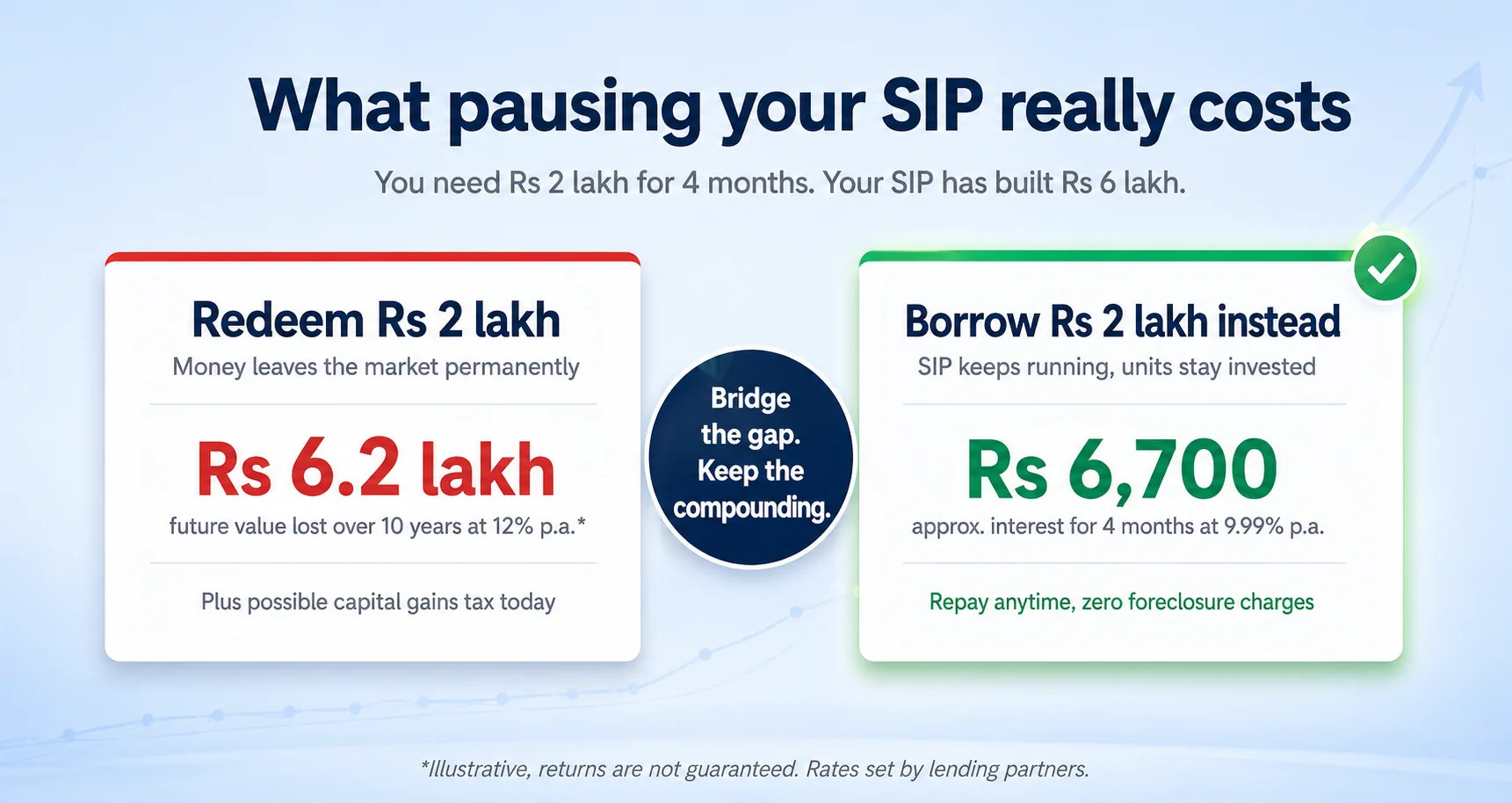
Say you run a Rs 10,000 monthly SIP and it has grown to Rs 6 lakh. You need Rs 2 lakh for four months.
- If you redeem Rs 2 lakh: assuming a 12% annual return (returns are not guaranteed), that Rs 2 lakh would have grown to about Rs 6.2 lakh over 10 years. Pulling it out now to cover a 4-month gap can cost you lakhs in future value, plus any capital gains tax on the sale today.
- If you borrow Rs 2 lakh instead: at 9.99% p.a. for four months, the interest is roughly Rs 6,700, charged only on the amount you drew. Your Rs 6 lakh remains invested, your SIP keeps buying, and your long-term investment plan stays intact.
For many temporary cash needs, borrowing may cost less than redeeming and losing future compounding, but the right choice depends on your portfolio and repayment ability. Borrowing protects the one thing a SIP depends on: time in the market.
How a loan against your SIP actually works
A loan against mutual funds lets you pledge your accumulated units as collateral and borrow against them, without redeeming anything.
Because nothing is sold:
- Your SIP keeps running on schedule. New instalments keep buying units as usual.
- Your existing units remain invested and continue to participate in market movements through the loan period.
- You trigger no capital gains tax, because there is no redemption. See how selling is taxed in our capital gains tax on mutual funds guide.
- You pay interest only on the amount you actually withdraw, from 9.99% p.a.
Why it fits a short-term need so well
On Volt Money you can open a loan account in under 10 minutes through a fully digital flow, and once it is open you get instant withdrawals, 24/7. It is a credit line that stays open for up to 6 years, so you repay when your cash flow recovers, with no foreclosure charges, and you can draw again later if another gap appears. For a temporary need against a portfolio you want to keep, that flexibility is the whole point.
Your limit can be up to 85% of your portfolio value, with up to 45% LTV on equity funds and 85% on debt and liquid funds. Even someone with no credit score can qualify, because the loan is secured by your units.
When you should still redeem
Borrowing is for temporary needs against a portfolio you want to keep. If the goal you were saving for has arrived (the down payment, the tuition, the purchase the SIP was always meant to fund) then redeeming is exactly right. The mistake is not selling when the goal is due. It is breaking a long-term SIP to cover a short-term gap that a small, cheap loan could have bridged. For a fuller comparison, see loan against mutual funds vs selling.
Rates, limits, and charges are subject to change and are set out in your Key Facts Statement before you borrow.
Keep your SIP. Borrow against it instead.
Check your credit limit on Volt Money. Free, takes 15 seconds. Check your credit limit